July 2026 DPA Newsletter:
July 2026 DPA Newsletter:
Interview Series: David Hume Kennerly on Photographing Vietnam, Jonestown, & History For 60+ Years
Expert Advice on Shooting Fireworks
Fantastic Fireworks Photos from Our Social Media Members
July FinerWorks Print Winners!
New Interview:
Pulitzer Prize-Winning Photojournalist
David Hume Kennerly
VIETNAM. JONESTOWN. INDIA–PAKISTAN WAR. A PULITZER PRIZE. AND MORE!
At 79 years old, David Hume Kennerly reflects on his 60+ year career in photojournalism, during which he photographed wars, world leaders, cultural icons, and historic events around the globe.
His work earned the 1972 Pulitzer Prize for Feature Photography and has appeared in TIME, Newsweek, and Life.
In our newest Celebrating Senior Shutterbug Champions interview series, Kennerly shares the stories behind his iconic photographs and the moments that shaped his career.
SUBSCRIBE
To see more interviews with the world’smost accomplished senior photographers!
Primer of the Month:
Expert Advice on Shooting Fireworks
| Featuring images from Digital Photo Academy instructors from coast to coast. |
| Each month, we share a primer with insights on photography. It’s a chance to learn from through tips, advice, and a behind-the-scenes look at photography. |
Few Fourth of July traditions are as visually striking as fireworks. While photographing them can be challenging, the results can be truly spectacular.
Here’s a guide to photographing fireworks successfully:
1. By Brian Wolfe, Digital Photo Academy instructor in the Hudson Valley of NY.

This first photo was taken on the 4th of July at Washington’s Headquarters in Newburgh.
I was trying to figure out how to get a shot of the fireworks over the Hudson River, the Victory Tower, and the crowd. Sadly, the tower and crowd had no light. So, I shot to expose the fireworks, and then I reduced the shadows in Lightroom to bring out the tower, the smoke, and the crowd.
Shot at ISO 100, f11, and 2 second exposures. The edit gave the shot a ghostly surreal feeling that I liked. A tripod was needed for both shots with such long exposures.
This image uses the rule of thirds by placing the main firework in the upper-right area of the frame instead of centering it. The building on the left and the seated crowd along the bottom help balance that off-center placement, so the composition includes both the event and the setting. This creates a stronger sense of place than a close-up firework photo because the viewer can see the scale of the burst above the park and waterfront.
A photographer could use this approach by positioning the main subject near one third of the frame and letting secondary elements occupy the opposite side or lower edge.

This second shot was also taken on the Fourth, at the top of a building on lower Broadway in Newburgh.
I was going for a higher contrast, flower-like appearance of multiple fireworks (with the radio towers on the mountains in the background giving it a little depth).
So, I boosted the shadows in Lightroom to darken the background and give the photo a more illustrated look.
This image uses centered composition by placing the two main firework bursts in the middle of the frame, one above the other. The larger pink-and-green burst fills the upper center, while the smaller gold burst sits directly below it, creating a clear vertical arrangement. The empty black sky around them keeps the viewer’s attention on the shape and color of the fireworks.
A photographer could use this technique by placing the main subject in the center when the subject has a strong, balanced shape that can hold attention on its own.
2. By Alina Oswald. Digital Photo Academy instructor in NY and NJ.
Alina offers some tips from her blog at alinaoswald.com!

First things first, the day (or a couple of days) before you go out to photograph–fireworks or any other subject for that matter–make sure you:
- Charge your batteries
- Clean your camera sensor (assuming you shoot digital)
- Back up your images from your memory cards and only then format your memory cards
- Prepare your lenses
- Have your tripod handy
- If you own one, have a remote shutter release handy, too.
Also, check the weather, scout out the place to make sure you find the best spot where to photograph the fireworks display, and so on.

What you’ll usually need in order to photograph fireworks:
– A camera body and lens(es), obviously
– A tripod (or a monopod; if not, you can try to increase the ISO a lot, today’s cameras can usually handle that easily without increasing the noise)
– Remote shutter release

Ideas on how to photograph fireworks:
– Arrive early and set up the tripod, camera, lens, etc.
– A good place to start when it comes to camera settings can be:
- ISO = native ISO for your camera
- Shutter Speed = BULB (manual shutter release or try 1s – 3s exposures, experiment)
- Aperture = f/11 – f/16 – when shooting fireworks it is dark outside, but the fireworks are bright; to capture details in the fireworks display, you might want to use a narrow aperture somewhere between, as mentioned, f/11 and f/16, but you can also experiment with f/8, although, at f/8, depending on the brightness of the fireworks, you might end up with slightly overexposed images, but you can adjust that by decreasing the exposure (shutter speed) or, if not totally overexposed, you can bring back details in the highlights in the post (yes, I said that); I think the key word here is an experiment, there is time, the fireworks display usually lasts for about half-hour; and while mentioning experimentation, you can also try zooming in/out while the shutter button is pressed.
– Zoom out to capture the overall scene (fireworks and surrounding buildings, nature, etc) to give a sense of setting, place
– Zoom in to capture close-ups or fireworks
– If possible, include people or buildings silhouetted by fireworks light
3. By Scott Crawford, Digital Photo Academy instructor in Los Angeles.

Queen Mary 4th of July celebration: It helps to have context for your composition like famous landmarks.
This image uses asymmetrical balance by placing the largest fireworks burst high on the left while the brightly lit ship sits low on the right. The two subjects are different in size, shape, and brightness, but they visually counterweight each other across the frame.
The dark sky and open water give both elements enough separation so the composition does not feel crowded. This approach creates scale: the fireworks feel massive, while the ship gives the viewer a stable reference point for the size of the scene.
f4 | 1sec | ISO 250

Manhattan Beach Holiday Festival: Using reflections to enhance the foreground.
This image uses reflection composition by positioning the fireworks above the pier and letting the wet sand and shallow water repeat the red light in the foreground. The reflected streaks extend the burst downward, so the main subject fills both the upper and lower parts of the vertical frame. The pier acts as a dividing line between the real fireworks and their reflection, keeping the scene organized.
A photographer could apply this by shooting bright subjects near water or wet ground and framing wide enough to include both the source of the light and its reflection.
f56 | 1sec | ISO 100
4. By Dave Rhodes, Digital Photo Academy instructor in Atlanta.

This image uses tight framing to make the fireworks dominate the composition.
The bursts are cropped close to the edges, especially at the top and sides, so the viewer’s attention stays on the overlapping red, blue, and yellow trails rather than the surrounding location. The small silhouettes at the bottom provide just enough context without competing with the main subject.
This technique works when the strongest visual information is the shape, color, and pattern of the subject itself, so the photographer fills the frame instead of leaving extra empty space.

This image uses foreground silhouettes for depth and scale by placing the dark heads and shoulders of the crowd along the bottom edge while the fireworks explode above them.
The people are not the main subject, but their recognizable shapes show where the viewer is standing and make the fireworks feel larger by comparison. The low horizon keeps most of the frame open for the bursts, while the crowd creates a clear foreground layer.
A photographer could use this approach by including spectators, trees, or buildings as dark foreground shapes when photographing a bright subject in the distance.
5. By Jerry Williams, Digital Photo Academy instructor in Dallas.
Both these images were shot in the 1980s on Kodachrome slide film with a Canon AE-1, shutter speed set to Bulb, with a shutter cable release on a tripod at f/16.
I tripped the shutter at the time the fireworks were shot, waited for the fireworks to go off, then closed the shutter.

This image uses vertical stacking by arranging the fireworks in layers from the lower blue burst to the larger red-and-white burst above it.
Instead of spreading the action across the full width of the frame, the photographer keeps the main activity concentrated in a tall central column against the black sky. This creates upward movement and makes the fireworks feel like they are building in stages.
To use this technique, place related subjects at different heights in the frame so each layer leads the eye to the next one above it.

This image uses radial composition by building the frame around several bright firework centers that send lines outward in different directions.
The largest burst on the left, the blue burst on the right, and the smaller green burst near the bottom all repeat the same outward-spreading shape, which makes the scene feel visually unified despite the busy subject matter. The effect is a dense, energetic image where the viewer’s eye moves from one burst center to the next instead of settling on a single point.
A photographer could apply this by timing the shot when multiple circular bursts are visible and framing them so their radiating lines fill separate areas of the image.
FIREWORKS – COMMUNITY PHOTO SHOWCASE
Featuring photos and insights from our social media members!
In our Celebrating Senior ShutterbugsFacebook group, members post their original photos (and very often the fascinating stories behind them).
This month, we requested they share shots of fireworks! Below, we’re featuring a selection of those images.
Join the group to share your shots, see others’ great photos, connect with fellow photographers, and get tips and advice on anything photography from peers and pros.
From Our Community
Fireworks shots by our social media members:

Photo just above by Gail Barsh on Celebrating Senior Shutterbugs Facebook
Caption: These fireworks are shot from the Okaloosa Island Pier in Fort Walton Beach, FL. They can be viewed every Wednesday evening during the summer. Always on a tripod, I use f/16, ISO 100, and leave my shutter on Bulb to capture as many bursts as possible.

Photo above by Dave Riewe Photography on Celebrating Senior Shutterbugs Facebook
Caption: In Minneapolis, the locals know that the best fireworks show doesn’t happen on the 4th of July, but rather the annual celebration of our lakes and rivers:”Aquatennial”. For this image, the Mississippi offered an assist by being especially calm. ISO 125, 19mm, f16, .5 sec exposure.

Photo above by David R. Robinson on Digital Photo Academy Community Facebook
Caption: A different spin on fireworks — fireworks shot from an airplane. This was at the night show of the Wings Over North Georgia Airshow in April celebrating the 250th USA anniversary at the USA. The Thunderbirds were there, so I wanted to get a shot of the fireworks with Nathan Hammond from Ghostwriter Airshows flying above the Thunderbirds. This was a 10s exposure at ISO 640 taken on a Sony a6600 with a Tamron 17-70mm lens at 17mm.

Photo above by Connie Mastenbrook on Digital Photo Academy Community Facebook
Caption: I took this at my brother’s house. A neighbor who lived behind him would always put on the best Fourth of July display for his neighborhood. I just love this image! I shot it with a Pentax K70 F/3.5 Exposure 5 sec ISO100 Focal Length 18mm Metering Mode Pattern No flash 35mm Focal Length 27

Photo above by Mitch Ridder on Digital Photo Academy Community Facebook
Caption: I used a twist for my fireworks shot – instead of shooting them directly, being shot out over the ocean off Laguna Beach, California, I chose to shoot their reflection in the dark tinted windows of the City’s lifeguard tower. My image was shot while on assignment as a newspaper photojournalist for the Laguna Beach Independent …

Photo above by Mike Rubin on Celebrating Senior Shutterbugs Facebook
Caption: Camera on a tripod. I used the “Bulb” setting with a baseball cap over the lens! Upon hearing the sound of the launch, I removed the baseball cap for 6 seconds. By removing the cap at the sound of the launch, I was able to capture the tail, which the average person there, didn’t see.

Photo above by Zenphotojourneyon Celebrating Senior Shutterbugs Facebook
Caption: When I took this photo I was playing around with Intentional Camera Movement since I already had a lot of traditional fireworks photos. I had the camera on a tripod with the tension nobs a little loose so I could get smooth motion lines. The camera was a Canon R6, 2 second exposure at F8 and ISO 800.

Photo above by Elizabeth R Logan Photographyon Celebrating Senior Shutterbugs Facebook
Caption: This photo is of the “grand finally” of the Uncle Sam Jam in Lincoln Nebraska on July 3, 2018. I was shooting from miles away over the top of some industrial buildings at the edge of my neighborhood. The event was held at a lake close to downtown.
I was using my Canon EOS Rebel T6i,
EF-S55-250mm lens, ISO2500
200mm-f5.6-1/250s

Photo above by Richard Jack on Celebrating Senior Shutterbugs Facebook
Caption: Vancouver Celebration of Lights This is an amazing show of lights and sound. Three nights at the end of July fill the sky with various figures and choreographic displays. Every year around 1.4 million people come to watch this magnificent show. Vancouver’s Celebration of Light is also one of the biggest international fireworks competitions in the world.

Photo above by Brian J. Simpsonon Celebrating Senior Shutterbugs Facebook
Caption: Two photos from the 2022 Saint Stephens Day celebration when I was living in Budapest, Hungary. Both photos were taken with a Sony A7R4 body & Tamron 18-300 F3.5-6.3 lens using a tripod. I paired the camera (set to manual mode/ ISO 100) to my phone to eliminate camera shake the need for a timer and was adjusting the settings on the fly using Sony’s “Imaging Edge” app.
Both photos were edited in Adobe Lightroom Classic: crop, lens corrections, basic (color,exposure,contrast,highlights,shadows,etc.), & tone curve adjustments.
7.0 sec @ f16, ISO 100, 55mm.
July FinerWorks Award Winners!

Every month, our judges select 2 of our social media members to receive an HD Metal print of one of their photos, printed by our sponsor Finerworks.
We choose one winner from each of our Facebook groups:
“Celebrating Senior Shutterbugs” and “Digital Photo Academy Community”
Posted on our “Celebrating Senior Shutterbugs” Facebook group by Éva Rózsa:

Posted on our “Digital Photo Academy Community” Facebook group by John Dickinson:

Monthly Small-Group Photo Workshops in 24 Cities
Plus Private Classes on Your Schedule
Since 2006, Digital Photo Academy has offered hands-on photography workshops in 24 cities across North America.
Access the live cities page on our website to explore upcoming photo workshops in your area. Elevate your photography skills with help from our experienced instructors in interactive sessions!
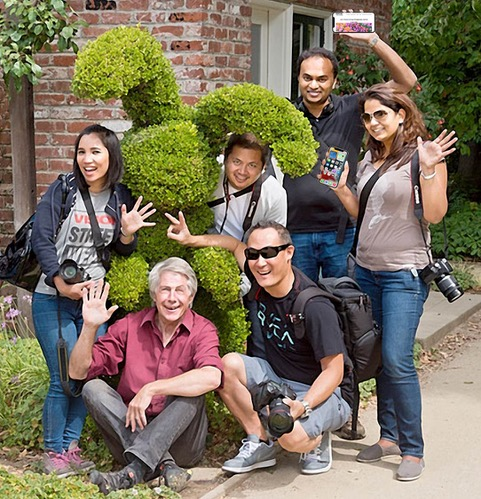
Our Social Media
Share your own original images in our Facebook groups, and you’ll be automatically entered into our monthly FinerWorks prize contest.
Each month, our judges pick two winners, and FinerWorks prints their photo on a beautiful HD Metal print that can hang on the wall.
Join our Facebook photo groups here:
• Celebrating Senior Shutterbugs
• Digital Photo Academy Community
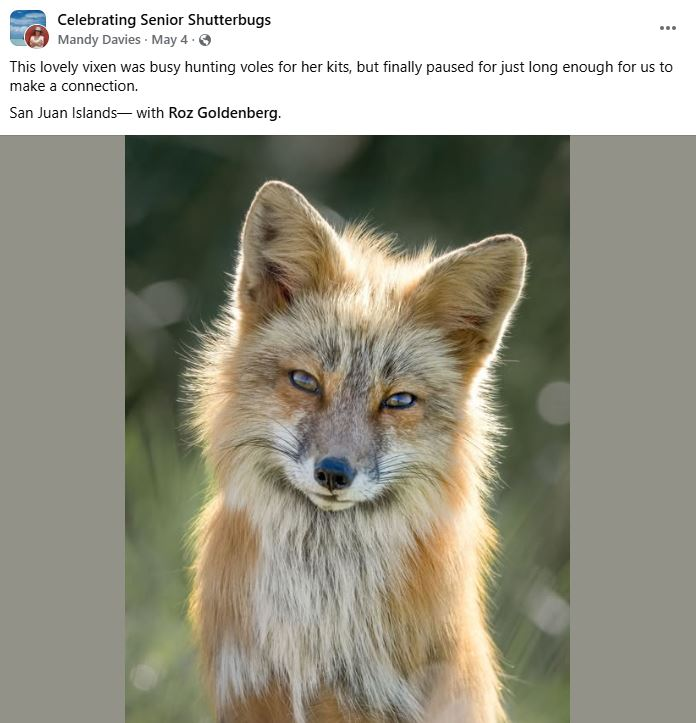
And don’t forget to check out our main social pages for stunning photography.
Main Pages:

Copyright (C) 2024 Digital Photo Academy. All rights reserved.